Description
Duration:
120 minutes including a Q&A
Includes:
• A certificate of completion
• The on-demand recording to watch at your convenience, for at least one year
• A handout in PDF format for viewing or self-printing
Objectives:
1. Identify common errors in clinical judgment
2. Review available Risk Assessment tools and taking a Risk Assessment history
3. Identify eight patterns of violence
4. Identify the role of firearms in violence
5. Describe the role of empathy and how to cope with counter-transference
6. Identify the significance of violent fantasies
7. Identify risk management strategies
8. Review the assessment of risk after a person has committed severe violence
9 Review how to document static and dynamic risk factors in a Violence Risk Prevention Plan
10. View video exercise to practice developing a Violence Risk Prevention Plan
Description:
One of the most important assessments that mental health practitioners must make is the client’s potential for violence. Different psychiatric disorders and diagnoses carry different levels of risk and history of personality traits and childhood antecedents will provide additional clues. During this three part webinar, a number of crucial topics will be discussed such as clinical factors and techniques, as will video case examples and case histories of persons who have committed violent acts. Just some topics to be covered will be: identifying the components of dangerousness, common errors in clinical judgment, identifying eight patterns of violence, assessing risk after a person has committed violence, significance of violent fantasies, murder suicide, the profile of the family annihilator, and developing a violence risk prevention plan.
Please Note: ** This workshop does NOT address violence in the elderly due to organic causes **
Who Should Attend?:
• Psychiatrists, Nurses, Clinical Psychologists, Psychiatric Social Workers and Counsellors who work in forensic, mental health, psychiatric settings.
• Staff who work in adult or juvenile forensic and/or correctional settings
• Criminal Lawyers and Justice personnel
• Intake and front line staff in community mental health and addictions settings
• Psychiatric Occupational Health and Recreational Therapists
• Mental health and addictions Managers & Educators
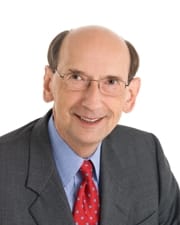 Dr. Phillip Resnick, MD
Dr. Phillip J. Resnick is a leading international authority on Forensic Psychiatry, specializing in the clinical prediction of the risk of violence and the assessment of malingering and deception. He has consulted on or provided expert testimony witness on a number of well-known criminal cases including those of Jeffrey Dahmer, Timothy McVeigh, Susan Smith, Andrea Yates and the Unabomber. Currently the Director of Forensic Psychiatry at Case Western Reserve University in Cleveland, Ohio, he is also a past president of the American Academy of Psychiatry and the Law. He has written extensively on forensic topics and is well known as one of the most outstanding speakers in the field of forensic psychiatry today.