
Description
Objectives:
By the end of this session, participants will be able to:
1. Describe the mechanisms by which opioids modulate pain, reward, stress, and physiologic function.
2. Differentiate the pharmacologic and clinical characteristics of commonly used opioid medications.
3. Apply contemporary concepts of opioid responsiveness to nociceptive, neuropathic, and nociplastic pain conditions.
4. Recognize the mechanisms and clinical implications of tolerance, opioid-induced hyperalgesia, and physical dependence.
5. Incorporate emerging evidence regarding partial agonists, including buprenorphine, into clinical decision-making.
Description:
Effective pain management requires more than just a prescription; it demands a understanding of the complex interplay between pharmacology and human physiology. In this comprehensive webinar, we will move beyond basic dosing to explore the mechanisms by which opioids modulate pain, reward, and stress. We’ll bridge the gap between theory and practice by differentiating the clinical characteristics of common medications and applying contemporary responsiveness concepts to nociceptive, neuropathic, and nociplastic pain. Participants will also gain critical insights into the biological drivers of tolerance, opioid-induced hyperalgesia, and physical dependence, while learning to integrate emerging evidence on partial agonists like buprenorphine into modern clinical decision-making.
Join us to refine your expertise and enhance patient safety in the evolving landscape of opioid therapy. You’ll walk away from this webinar with a better understanding of mechanisms of action; a better framework with which to choose what medication is best for specific pain phenotypes; comprehend risk mitigation and the “why” behind hyperalgesia and dependence”; and fully grasp the “buprenorphine shift” – the role of partial agonist in contemporary pain care.
Who Should Attend?:
• Physicians, Nurses, NPs who work in Acute, Med Surg, & Critical Care Settings
• Physicians, Nurses, NPs who work in Primary Care, Stand Alone Clinics, & Urgent Care
• Nurses & Multidisciplinary team members in Home Care Settings
• Multidisciplinary team members involved in pain care: Pharmacists, PTs, & OTs
• Managers and educators in above settings
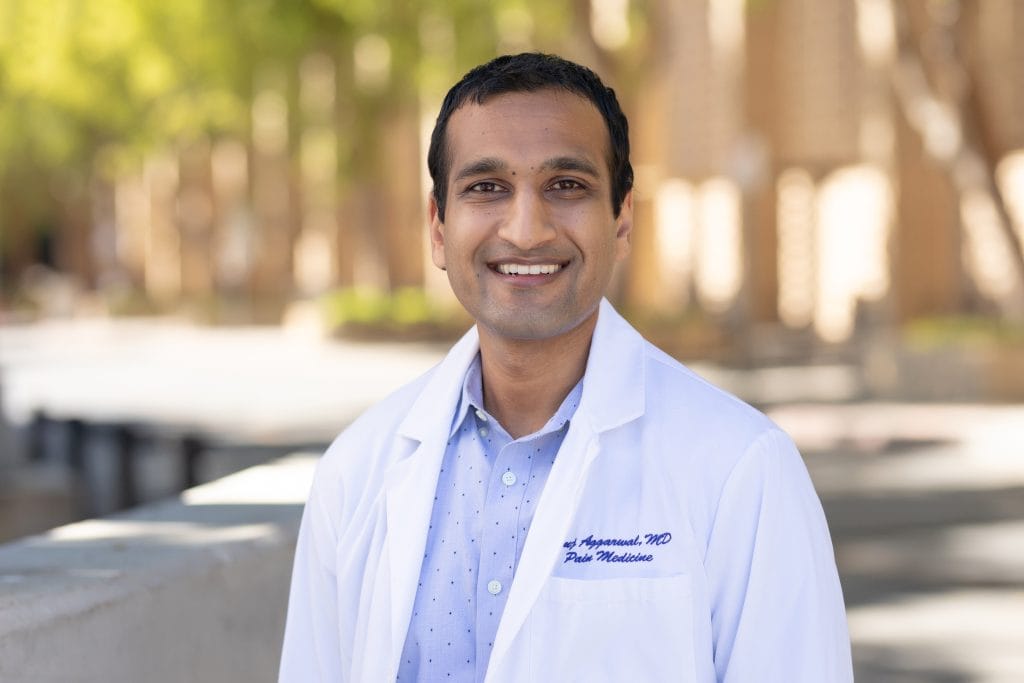
Anuj Aggarwal, M.D.
Anuj Aggarwal, M.D., is a practicing anesthesiologist and pain specialist at Stanford University. Originally from Southern California, Dr. Aggarwal completed his undergraduate degree in biology with honors at the University of Southern California and earned his medical degree with distinction from the University of California, San Francisco, where he also completed the Health Professions Education (HPE) advanced program. He completed his internship at Santa Barbara Cottage Hospital, followed by residency in Anesthesiology and fellowship in Pain Medicine at Stanford, where he has served on faculty since 2018. Dr. Aggarwal’s clinical and academic interests include perioperative pain, orofacial pain, and the history of medicine. He serves as Associate Program Director for the Pain Medicine Fellowship, Course Director for medical student pharmacology, and Associate Director for the Science of Medicine pre-clerkship curriculum. He is also part of Stanford’s E4C (Educators for Care) program, teaching clinical skills and reasoning while mentoring medical students throughout their training. Additionally, he remains active in anesthesia residency education through teaching, mentorship, and curriculum leadership.